
Epidermolysis Bullosa Blister Care

Blisters are common in most types of EB, and caring for them is often part of daily care.

These steps reflect commonly used methods, drawn from clinical and community sources, for all types of EB. Because every person’s needs are different, adapt them with your care team based on your symptoms and how your skin responds.
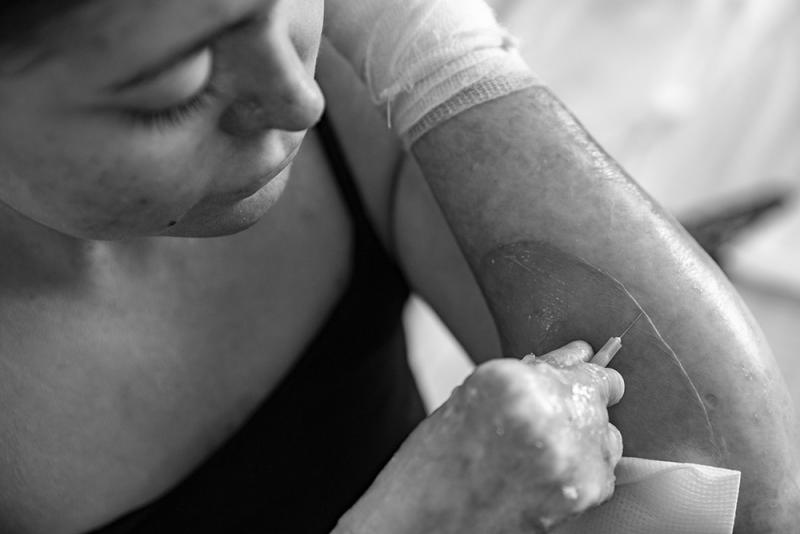
When to lance: tense blisters the size of a dime or larger. Never lance blisters in the mouth or near the eyes.

  1. Get ready. Wash your hands, gather your supplies, and put on gloves. Use a sterile needle, lancet, or No. 11 blade.
  2. Push the fluid to one side. Gently push the fluid toward one corner of the blister.
  3. Make 1 or 2 holes on the side of the blister, not the top. Make the hole big enough for the fluid to drain.
    Gently drain the fluid. Use gauze or a cotton swab to push the fluid toward the opening, with the help of gravity. Use another piece of gauze to soak up the fluid. It may be clear, cloudy, or bloody.
  4. Leave the blister roof in place. Don’t remove it. It protects the skin underneath as it heals.
  5. Use the same lancet on more than one blister only if there are no signs of infection.
  6. Dress the area. Choose a non-adherent dressing larger than the wound. Lightly coat the side that touches the skin with ointment or emollient so it won’t stick. Apply it, then secure it with rolled gauze and a retainer net.

Never use adhesive tape or regular bandages on EB skin.

Watch for signs of infection, like white or cloudy drainage, increased redness, or warmth. Learn more in Recognize Infection.

In-depth resources from DEBRA International. Each opens a short survey before the download.

FOR ADULTS AND CARERS

Patient Guide for Adults with EB

Guidance for adults living with EB and the people who care for them.

QUICK REFERENCE

Healthy Body and Skin Booklet

A quick-reference guide to the key aspects of skin and wound care in EB.

FOR PROFESSIONALS

Clinical Practice Guidelines

International best-practice guidelines for skin and wound care in EB, based on a systematic review of the evidence.

Questions about blister care?

Our EB Nurse Educator can walk you through blister care and help you find what works for you. 

All medical information from debra of America is for informational purposes only and isn’t a substitute for care from a qualified physician. Please discuss all care plans with your doctor, and check with them before starting any medication or treatment.