School and Epidermolysis Bullosa

Every child deserves a safe and supportive place to learn. For students with Epidermolysis Bullosa (EB), school can come with unique challenges.

Simple activities like walking, holding a pencil, or playing at recess can cause painful blisters and wounds, so the right accommodations matter.

School nurses, teachers, and parents all play a role. Understanding Individualized Healthcare Plans (IHPs), 504 Plans, and IEPs, along with practical classroom changes, can help create an inclusive school experience.
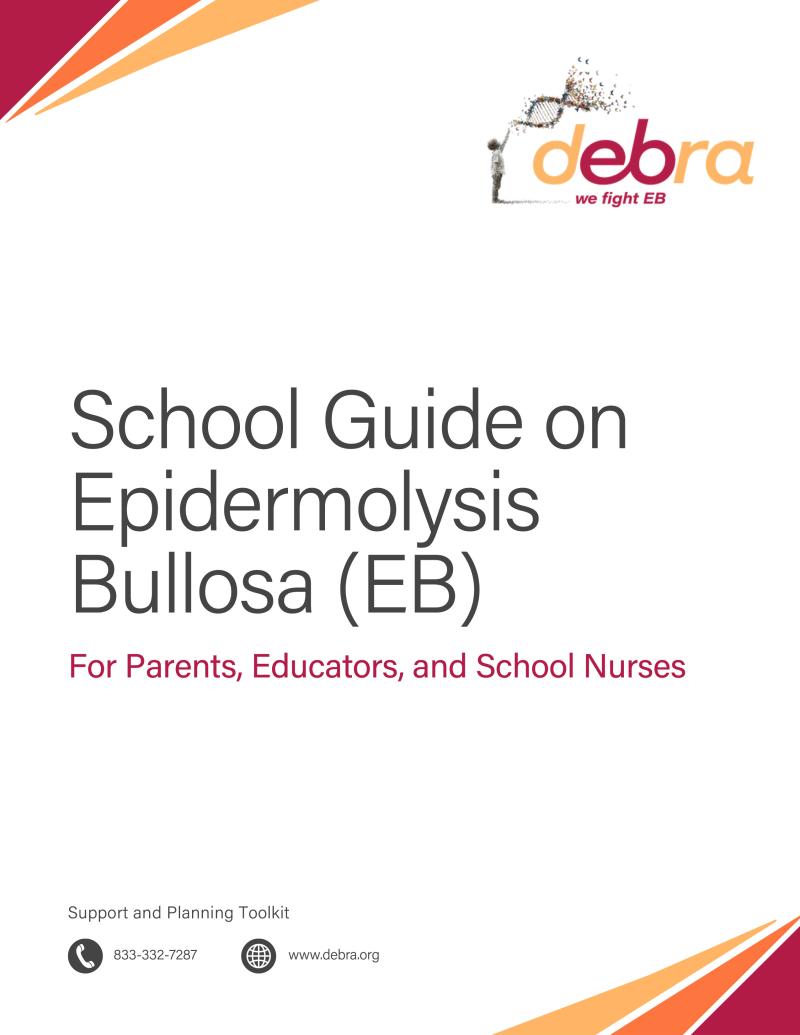
School Guide on Epidermolysis Bullosa

Our guide helps families and schools work together, with expert guidance, checklists, sample letters, and practical strategies. Inside, you’ll find:

→ An overview of EB and how it affects students in school
→ Guidance on Individualized Healthcare Plans (IHPs), 504 Plans, and IEPs
→ Classroom accommodations and modifications
→ Strategies for working with parents and school staff
→ Sample letters for schools and other parents
→ Checklists for planning and advocacy

Download the guide (PDF)


More School Resources

EB Classroom Videos
EB Classroom Videos

A two-part video series from Children’s Hospital Colorado, endorsed by debra of America, to help schools create a supportive, academically engaging classroom.

EB Awareness Cards

Business-size cards to hand out to classmates, parents, neighbors, and local businesses to help others understand EB.

Higher Education and EB
Higher Education & EB

Student stories and tips on disability services, accommodations, and self-advocacy for students heading to college.

Questions about EB at school?

Our EB Nurse Educator can help families and school nurses plan for a student’s care.